Value Proposition
Customer first
The Six Pillar Model is a tool which can be applied in different company analyses and current digital contexts to measure and analyze the level of digital transformation and guide the company on how to increase their adaptation capacity to a new digital era. It is an evolution of classical digital transformation focused on six key aspects of the company.
Customer first
Please make things easy
Optimize... again and again
Do new things, no the same ones
The only asset that truly matters
Adapt what you need and do not forget data
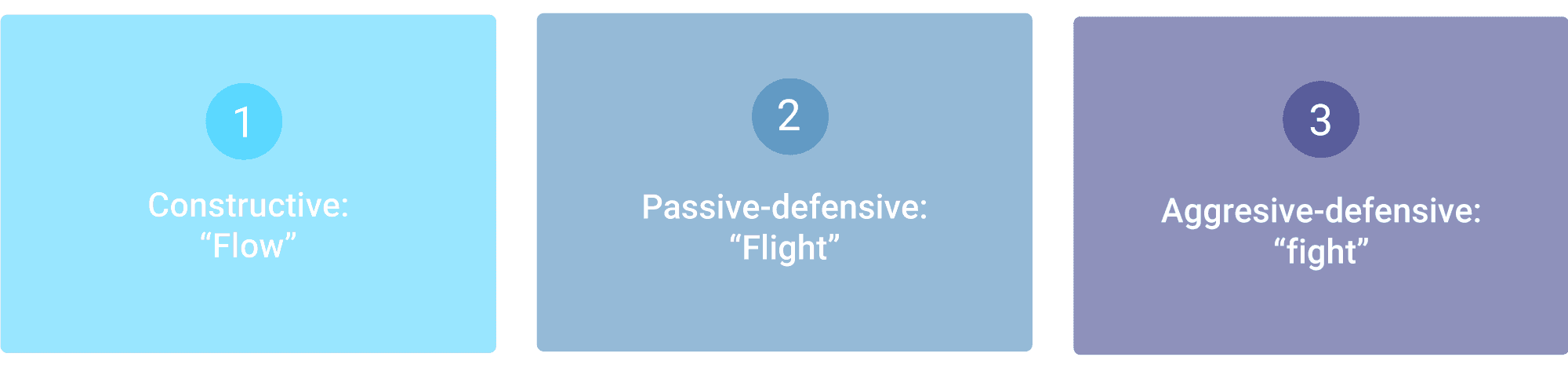
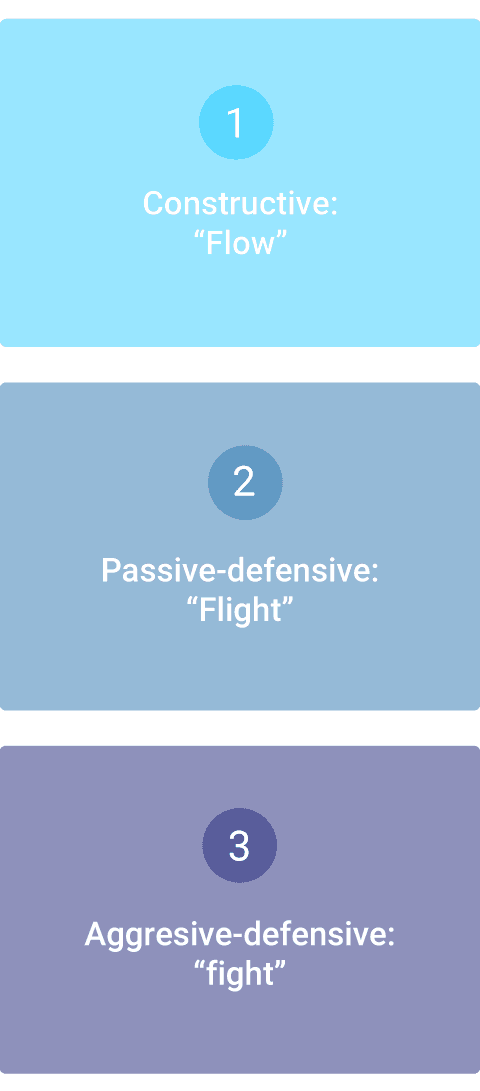
It is all about a transformation process composed by three main events: Digitization, Digitalization and Digital Transformation. There are differences between them, each of the six pillars belongs, and matches better each of the mentioned transformation events.
Is about disconnected technology
Is about doing the same with new technologies
Is about holistic change, opening new monetization and markets opportunities
Drag and drop the following elements from the list into the correct box. Each box corresponds to one of the six pillars and their description.
Value proposition in a digital environment is no longer defined by the industry – it is defined by the customer, forcing companies to be ahead of customers in a continuous path of discovery of new business opportunities. According to Michael Porter’s Model, a proper value proposition answers three main questions:
What ends users
and channels?
Which products,
services, features?
Premium or discount?
Shape enterprise ambition, strategy and business case based on insights
Reinvent and prototype new capabilities and breakthrough journeys as part of a program
Activate an ecosystem to rapidly deliver at scale
Built what the customers required no what we do think they need
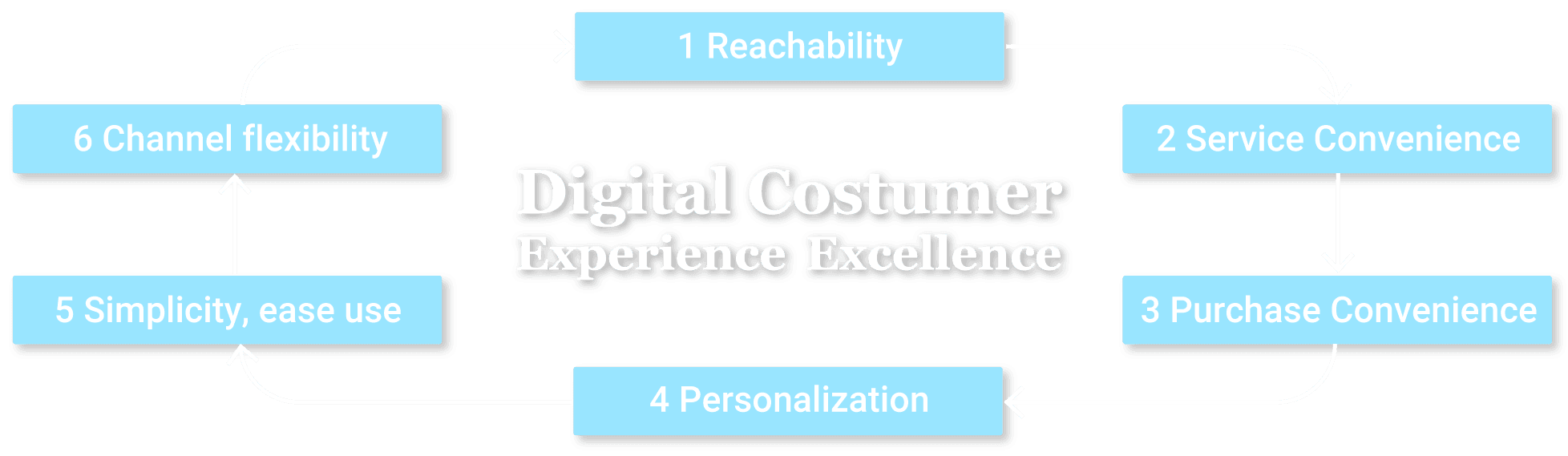
The Customer Experience Pillar is focused on improving the overall customer interactions with the company during the customer´s journey from awareness to advocacy. Customer expectations in the current digital economy have shifted greatly and are defined by six main aspects:
According to several studies, 76% of customers expect companies to understand their needs and necessities. Companies today have had to adapt to a rapid speed. Corporations such as Infosys approach this situation in different ways and only a third of todays businesses manage to satisfy the demanding customer experienceCX and can deliver high-quality experiences with firm strategies
These are companies that dont view customer experience as a crucial differentiator. There are no efforts towards developing a CX strategy or measuring CX initiatives
These are companies that recognize the need to improve a customers experience. They have put basic steps in place to identify and measure CX- related issues, but dont have a clear CX strategy in place
These companies try to deliver a high-quality experience for their customers. They have a clear CX strategy with processes firmly in place to measure results.
Their CX strategy is embedded in everything they do. Customer feedback forms the core of their strategy and decision-making, and they continuously iterate their CX practices to meet customer demand
In which of the four CX Corporation boxes would you place Infosys Live Enterprise?
The vision to MOVE from a
product focus to a customer focus
the journey for physical to
digital and digital to physical (Processes)
The customer touchpoints that
matter (interactions, customer service)
Interactions with repeatable
processes at every touchpoint
Fill in the gap with each of the following statements from the correct circle
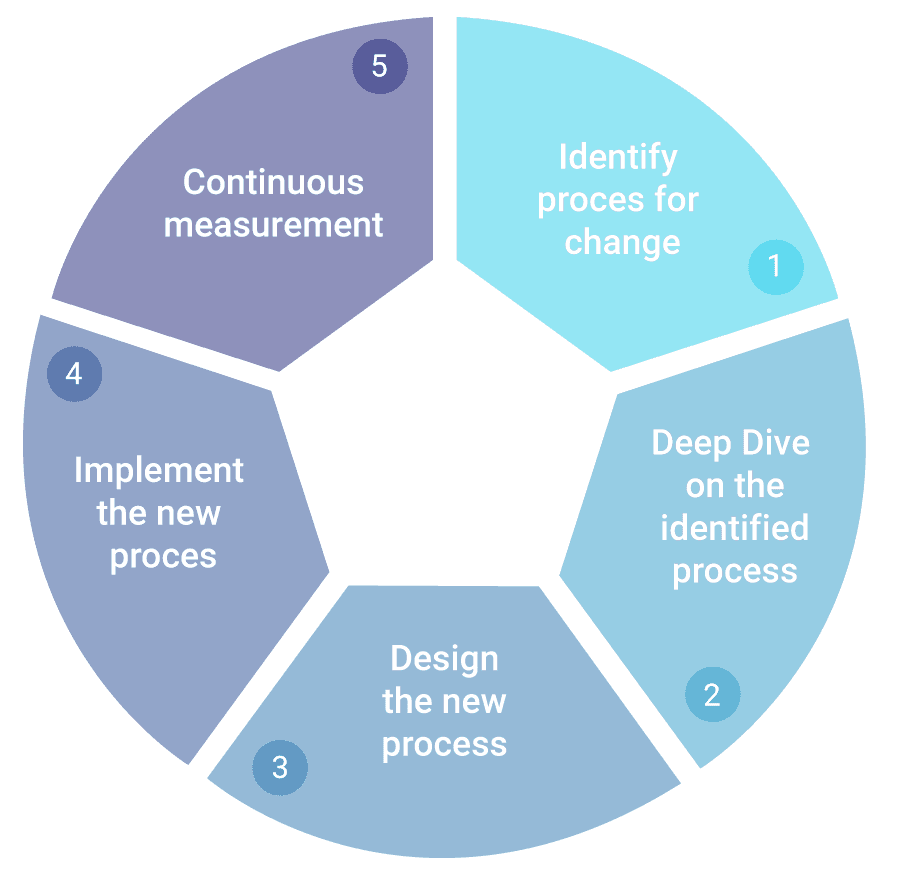
Operational processes where optimization and continuous business processes re-design is key to increase company agilities in the different areas of the value chain.
A collection of related events, activities, and decisions which involve several actors and resources which collectively lead to an outcome that is of value to an organization or its customers. Business processes occur in all organizational levels, and they may or may not be visible to customers.
A business process may often be visualized (modeled) as a flowchart of a sequence of activities.
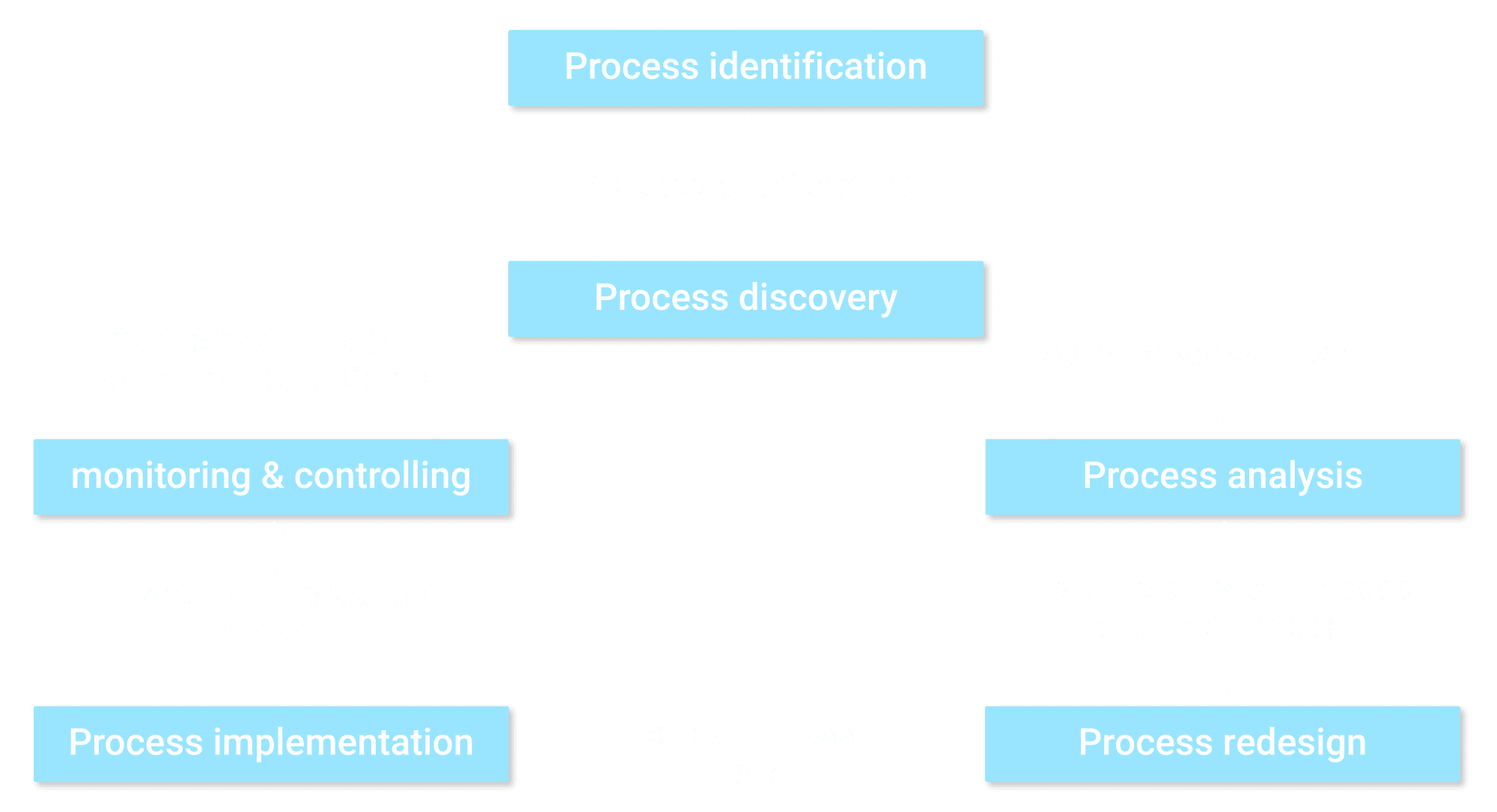
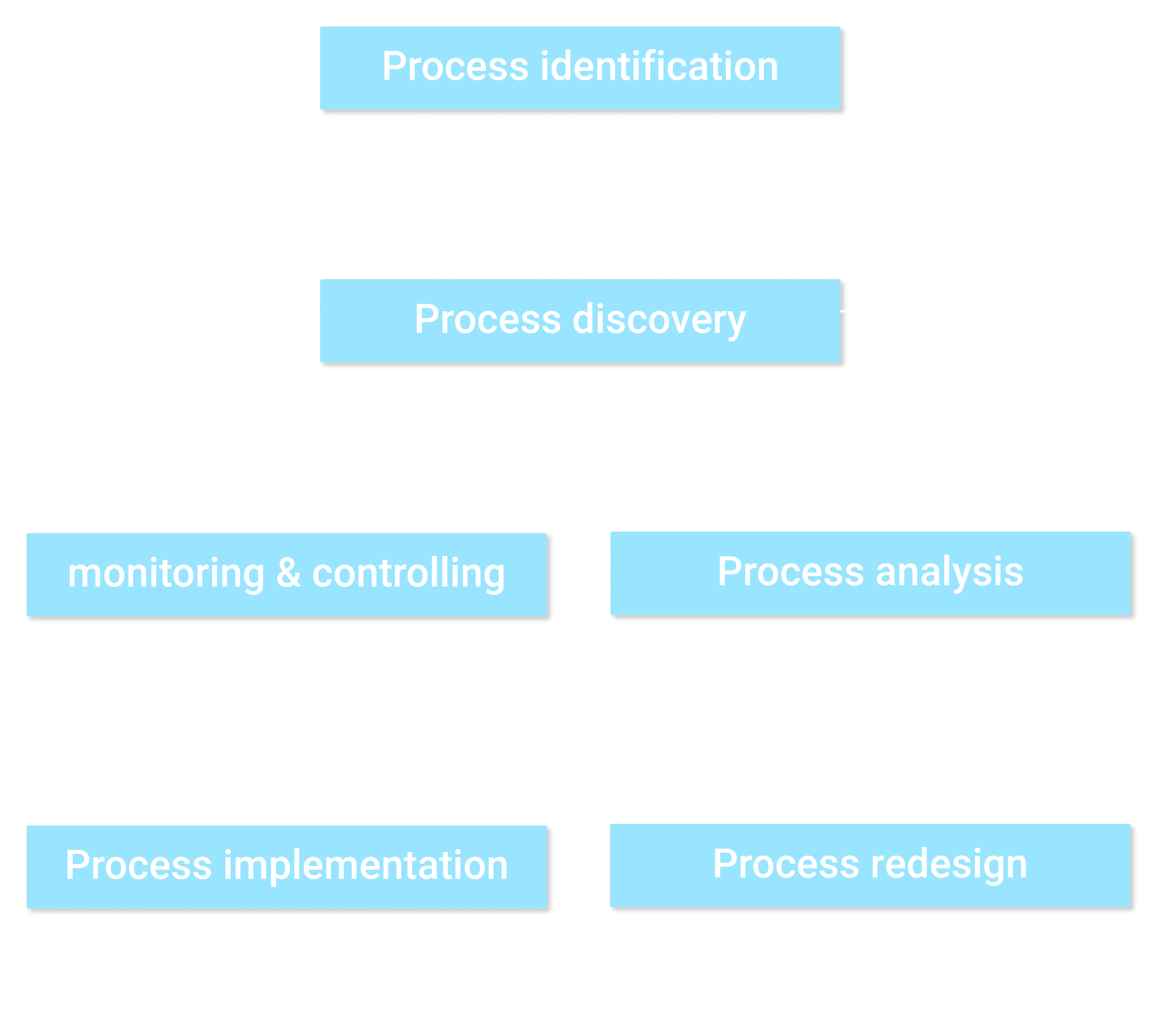
A business process may often be visualized (modeled) as a flowchart of a sequence of activities. Click on the squares below to display the explanation.
Process Identification: Process identification refers to systematically defining business processes of organization and establishing criteria to select processes for improvement. Is it a process at all? Can the process be controlled?
The Business Processes Management Model provides a variety of tools and methodologies to analyze, design, optimize processes. It is used by firms to manage business process redesign.
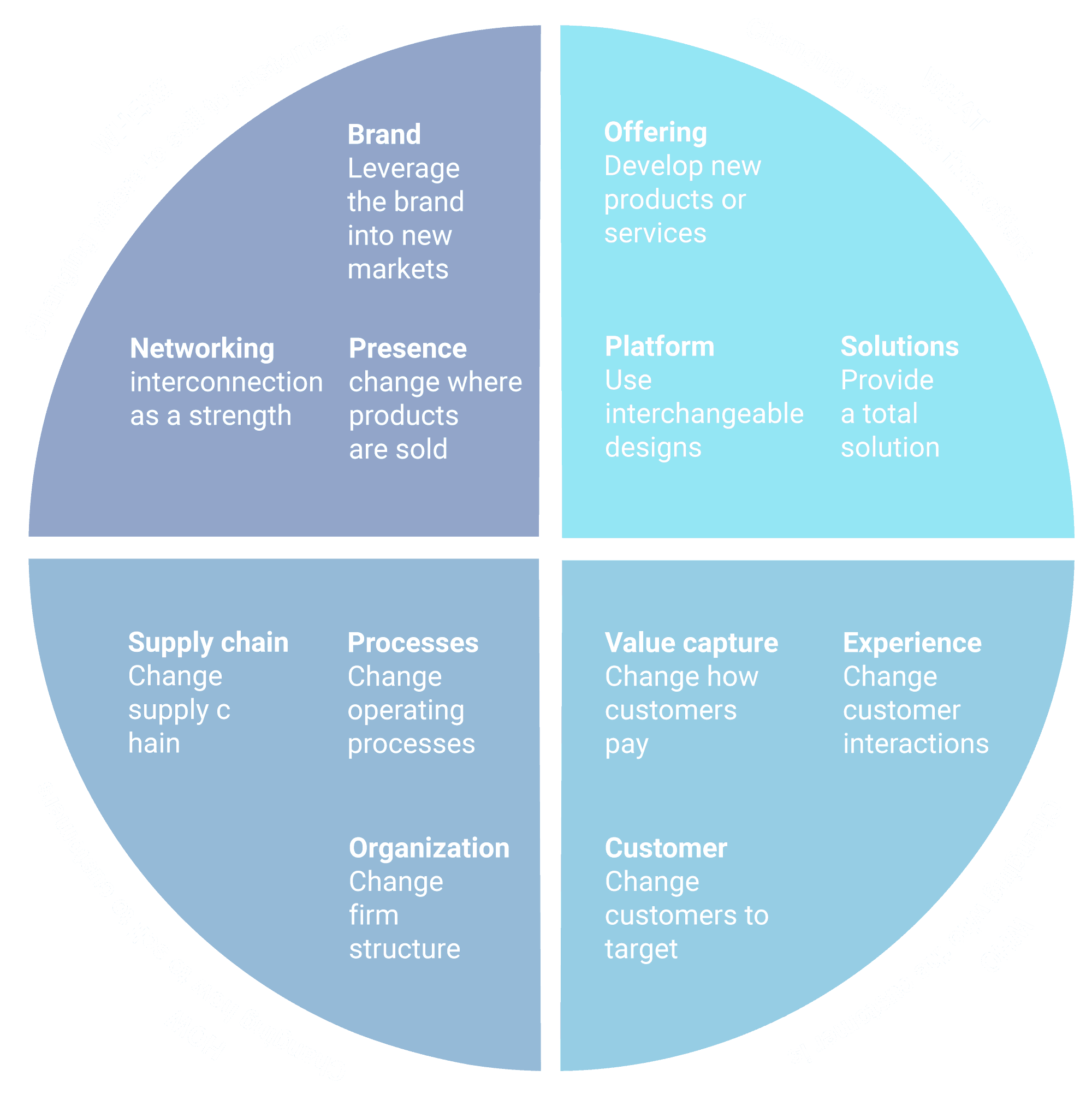
Business Models are innovative methodologies which help us reinvent the way the company makes a business impact. They provide a more holistic perspective than a financial focused on content or product model or the ones focused on the experience and the platform or channel.
The Customer Experience Pillar is focused on improving the overall customer interactions with the company during the customer´s journey from awareness to advocacy. Customer expectations in the current digital economy have shifted greatly and are defined by six main aspects:
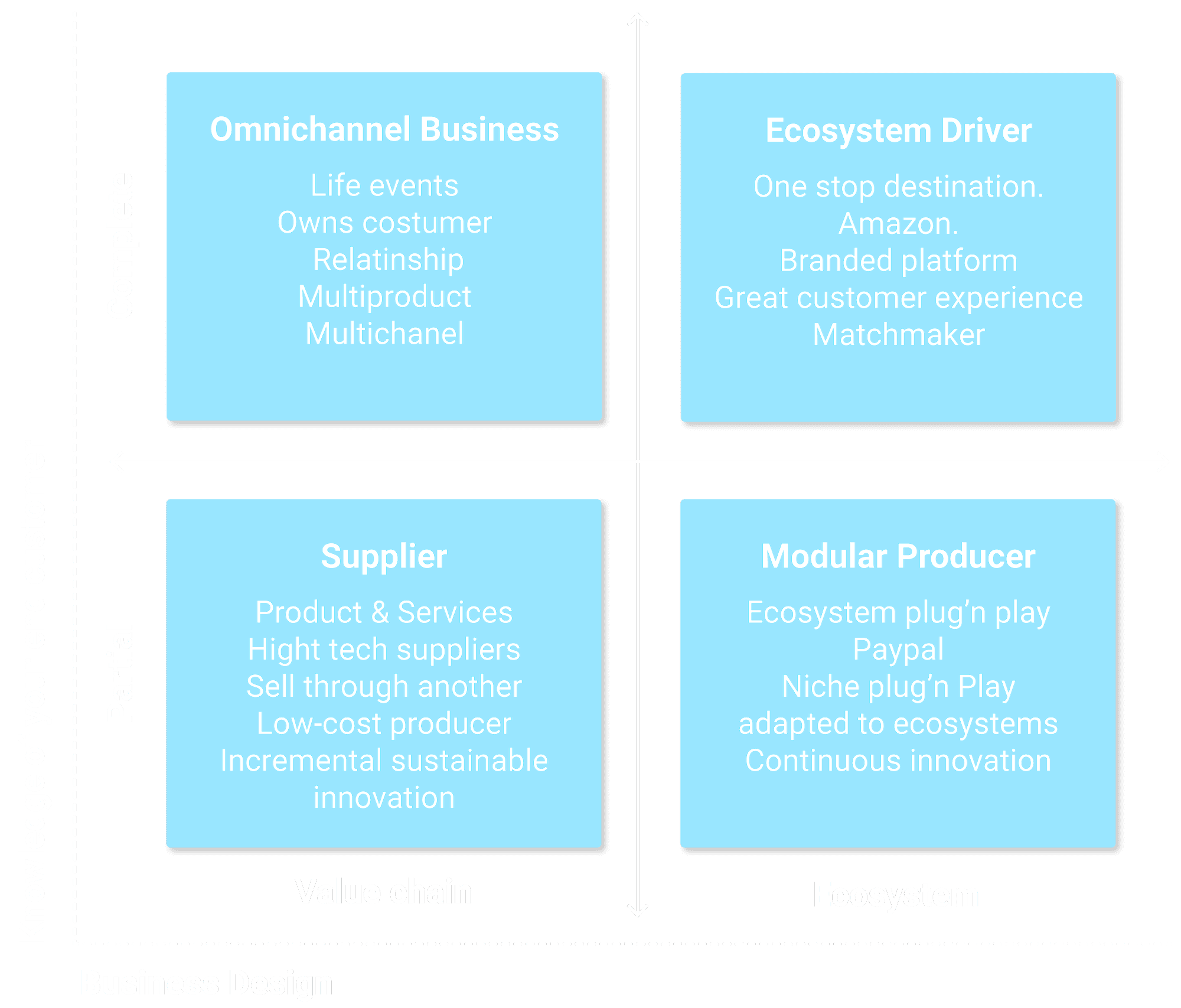
The simplest explanation according to journalist Michael Lewis is, “All it really means is how you planned to make money”. In the digital ecosystem, there are four key types that most companies fall under.
Enable interactions across all boundaries
Analyzed data from multiple sources
Expand industry boundaries through holistic solutions
Create agility through control over and access to resources no ownership
Scale through operational excellence
Product information, price and use details, digital such as e-book, e-services, accounts, movies, software.
Experience can include customer-facing digitized business processes, community and customer inputs, expertise for informed decision making, recommendations, tool and interfaces.
Internal: other business processes, customer data and technology.
External: proprietary hardware, public networks, partners.
People, culture, and talent pillar implements and fosters a culture of innovation where our internal and external talent can flourish in our company.
Innovation is the application of creative ideas, knowledge, or new technology, to a product or service, process, or business model that is accepted by markets and society.
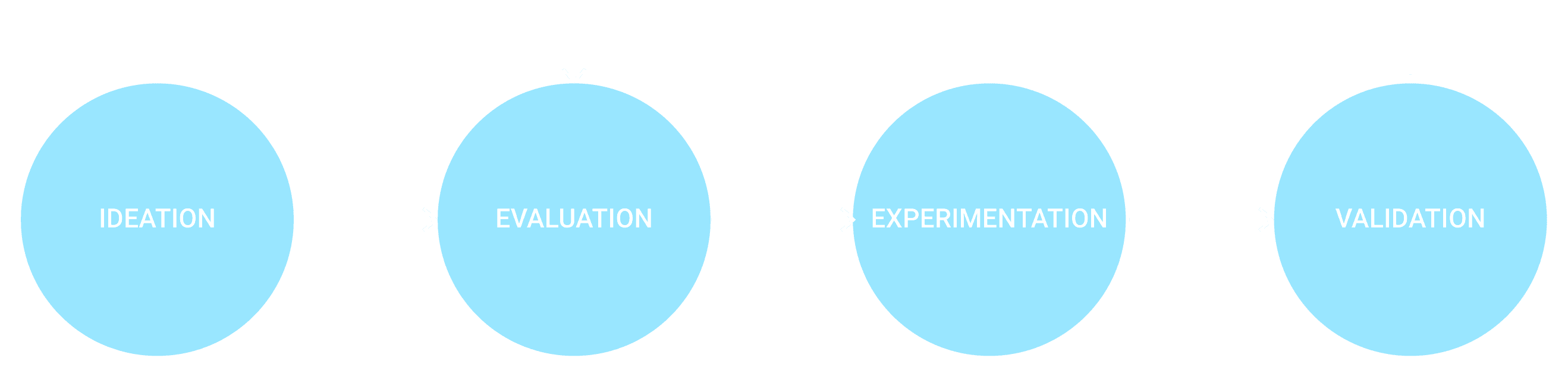
Observe problems and opportunities and come up with ideas and solutions to these problems
Evaluate ideas based on predefined criteria and prioritize them. md:
Start testing your idea with a real audience, gather feedback from different groups of people
Use feedback and other data to validate your idea
Nowadays in a VUCA environment, companies must decide if they have the capabilities to keep path with an innovative ecosystem from an internal perspective or need to open themselves up to a wider environment where collaboration becomes key to be able to bring outside ideas and resources to strengthen internal innovation processes. Open innovation is a must.
OCI measures organizational behaviors and how they impact the effectiveness of the organization. It measures behavioral norms and expectations – what it takes for you and people like yourself to “fit in” and meet expectations in your organization. Behaviors can be developed in a way that make both teams and the individuals within them more effective.
Artificial Intelligence, Machine Learning, Edge Computing, Quantum Computing, etc. Nowadays the amount of technological resources we have to our reach are overwhelming, but useful tools when performing a digital transformation process.
Enterprises most be suited and adapted to the use of these technologies. They must have a solid integrated Enterprise System with the following elements:
Also known as Machine to Machine (M2M), Skynet or Internet of Everything.
IoT is the network of physical objects—devices, vehicles, buildings and other items embedded with electronics, software, sensors, and network connectivity—that enables these objects to collect and exchange data. Its main characteristics are: Heterogeneous, Large scale, Dominant
Main obstacles or challenges that the Internet of Things involve are:
“Big Data” exceeds the capacity of traditional analytics and information management paradigms across what is known as the 4 Vs: Volume, Variety, Velocity, and Veracity
Scale of data: its estimated that 2.5 quintillion bytes of data are created each day; 6 billion people have cell phones.
Different forms of data: more than 4 billon hours of video are watched on youtube each month; The global size of health data was estimated, in 150 exabytes
Analysis of streaming data: Modern cars have close to 100 sensors that monitor items such as fuel level and tire pressure; the New York stock Exchange captures 1tb trade information during each trading session.
Uncertainty of data: 1 in 3 business leaders dont trust the information they use to make decisions; Poor data quality costs the US economy $3.1 trillion a year
Which is the biggest opportunity for Big Data in your organization?
85% of Fortune 500 organizations will be unable to exploit big data for competitive advantage. Business analytics needs will drive 70% of investments in the expansion and modernization of information infrastructure. Decision Making 43%; Processes Automation 12%; Insight Discovery 45%;